What is ‘full fibre’?
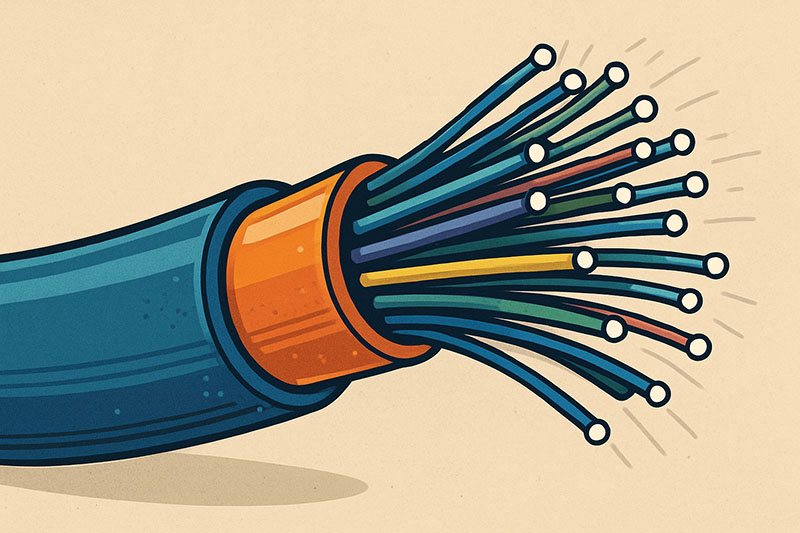
“Full fibre” refers to modern internet networks that use only fibre optic cables to connect homes and businesses—no old copper wires or mixed copper-fibre networks involved.
Although installing full fibre can be costly, it delivers much faster speeds and far more reliable connections than older networks. As we rely more on the internet for work, learning, streaming, and staying in touch, full fibre helps future-proof our homes, businesses, and communities.
The term ‘full fibre’ has been used for several years and is used to distinguish networks that use only fibre optic connections from copper or part copper/part fibre connections of the past.
Generally ‘fibre broadband’ can refer to two types of services:
Part Fibre — These services include ‘fibre-to-the-cabinet’ (FTTC; also known as VDSL) which use copper phone lines to deliver the service from a street cabinet which may be up to a few hundred metres away from your property. Services were often branded ‘Superfast’ or confusingly ‘Superfast Fibre.’ To complicate the terminology even more the Virgin Media cable company delivers services over Hybrid Fibre Coax (HFC) using DOCSIS technology.
FTTC services are typically “up to 80 Mbps” download, and your speed will depend to great extent on the length of the copper phone line. DOCSIS can deliver 1Gbps and faster services. Also a technology called G.Fast delivers fibre closer to the home than the cabinet and can deliver up to 300Mbps or so, but again are dependent on the line length.
This all gets very confusing.
Full Fibre — by contrast is very simple. The fibre optic cable comes directly into your home or apartment block. Data signals do not degrade over fibre in the same way they do over copper cables. Consequently the service you buy is actually what you get in terms of speed – although your home wifi may impact the headline speed delivered by the service provider to your router. Fibre is also more reliable than copper being less susceptible to outages due to weather or other factors.


